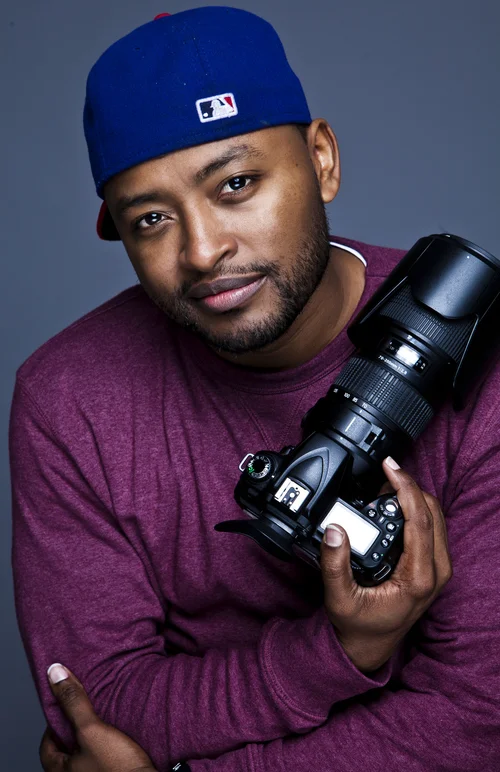
Your headshot works when you are not in the room. It sits on the LinkedIn profile a recruiter opens before they call you. It goes on the conference slide before you walk out on stage. It runs next to your name on the company site, on the panel bio, in the press release. You get one frame to say I know what I am doing and I would be good to work with, and most people give that frame about four minutes of thought.
I shoot a lot of headshots — executives, founders, realtors, students about to graduate into their first real job. The five things below are what I actually adjust in a session. Four of them cost you nothing and work no matter who is holding the camera.
1. Lean in. Almost everyone stands too far back.
The single fastest fix in any headshot is bringing your head forward off your spine, toward the lens. Not your whole body — just push your forehead an inch or two toward the camera and let your chin follow slightly down.
It feels ridiculous. You will feel like a turtle. I tell every client this before I ask for it, because the feeling is so strange that people fight it. But the camera reads that lean as attention and engagement. Standing straight up and back reads as retreat. The difference between a headshot that looks passive and one that looks like leadership is often those two inches.
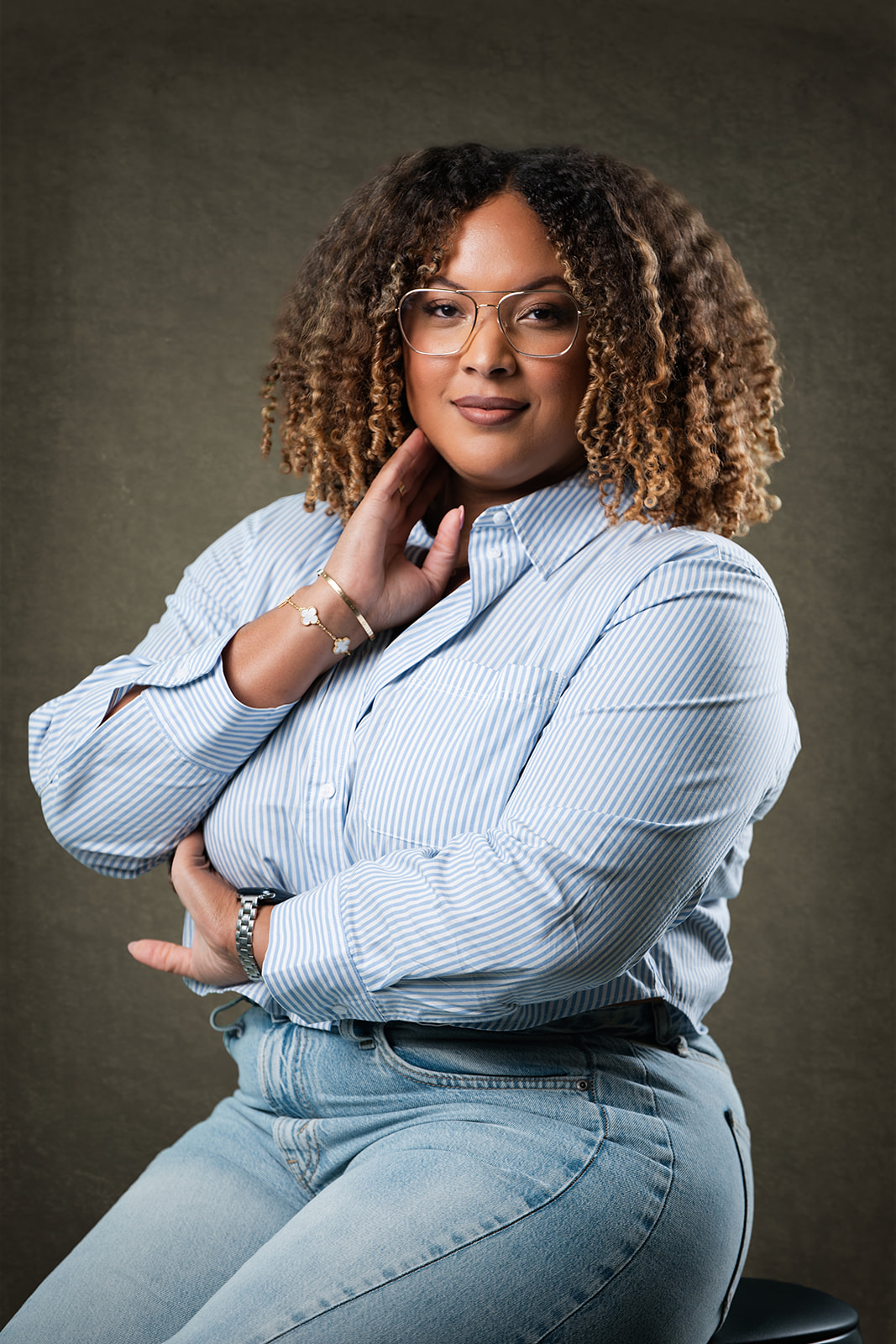
The lean is subtle in person and obvious in the frame.
2. Chin forward and slightly down — not up.
Raising your chin feels confident. It photographs as looking down your nose at people, and it opens up the underside of the jaw in a way no one enjoys seeing.
Forward and slightly down does the opposite. Pushing the chin out and away from the neck stretches the skin under the jaw and gives you a defined jawline. This is the tip that makes people ask what I did in retouching. I did nothing in retouching. You moved your head.
If a direction feels slightly awkward to hold, it is usually the one that looks right in the frame.
3. Dress for separation from the background.
A charcoal suit against a dark grey background turns your torso into one shape and your head into a floating object. It is the most common wardrobe mistake I see, and it is invisible until you look at the picture.
Before your session, ask what the background will be, then pick something that separates from it. Dark background, go lighter or add contrast at the collar. Light or white background, a darker jacket will hold its edge. Solid colors over patterns almost every time — fine stripes and small checks can shimmer under the lens. And bring a second option. It costs you nothing to have it in the bag and it has saved plenty of sessions.
4. The smile lives in the eyes, not the mouth.
A mouth-only smile is the reason so many professional headshots feel slightly off. The viewer cannot always name what is wrong, but they register it.
The muscle you want is the one that tightens the lower eyelid — photographers call it the squinch. Practice it in a mirror once and you will have it forever. Better still, stop performing an expression and think about a specific person or a specific thing that actually amuses you. I will usually talk to you about something real until your face does the work for me. That is most of what I am doing when it looks like I am just chatting.
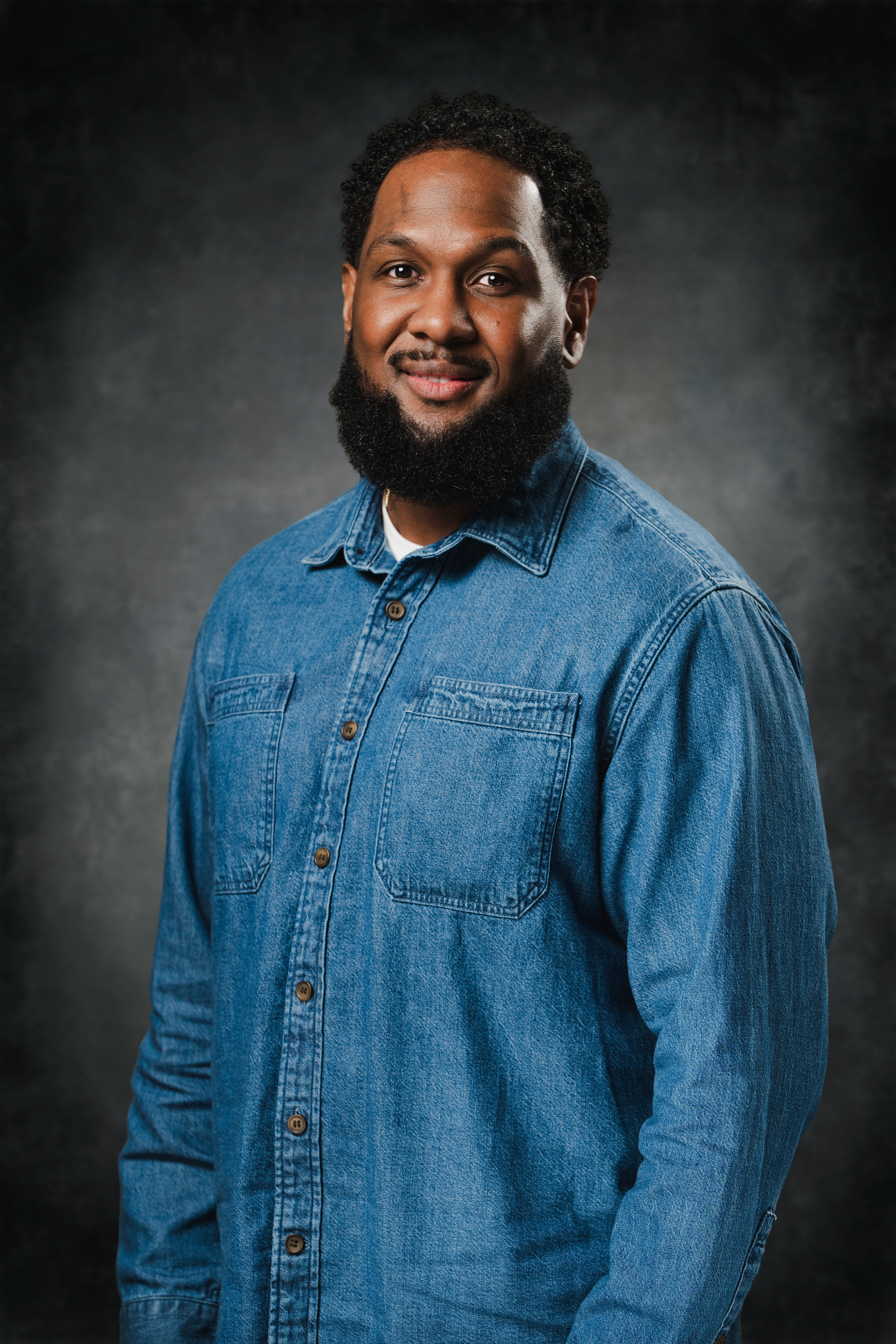

5. Let the light come from the side you want shaped.
Flat light — straight-on, even, no shadow — makes a face look wider and softer. Light coming from slightly to one side and above creates a small shadow under the cheekbone and down one side of the nose, and that shadow is what gives a face structure.
If you are shooting yourself for something quick, this is easy to use: stand so a window is at roughly forty-five degrees to your face rather than directly in front of you, and get the light source above your eye line, not below it. Below is the flashlight-under-the-chin look, and no one has ever been promoted because of it.
The one that is not a technique
Breathe out just before the frame. Almost everyone holds a breath when a camera comes up, and a held breath locks the shoulders somewhere around the ears. Exhale, let the shoulders drop, then look up. It takes a second and it changes the whole posture of the picture.
None of this requires expensive gear. It requires someone paying attention to your face for a few minutes, which is really what you are hiring a photographer to do.